Geriatric Mental Health Irvington, NJ
Geriatric Mental Health Irvington, NJ: Depression is not a normal part of aging. It is a treatable illness that older adults get less often diagnosed and less often treated than anyone else, usually because the symptoms get filed under "getting older" by everybody including the patient.
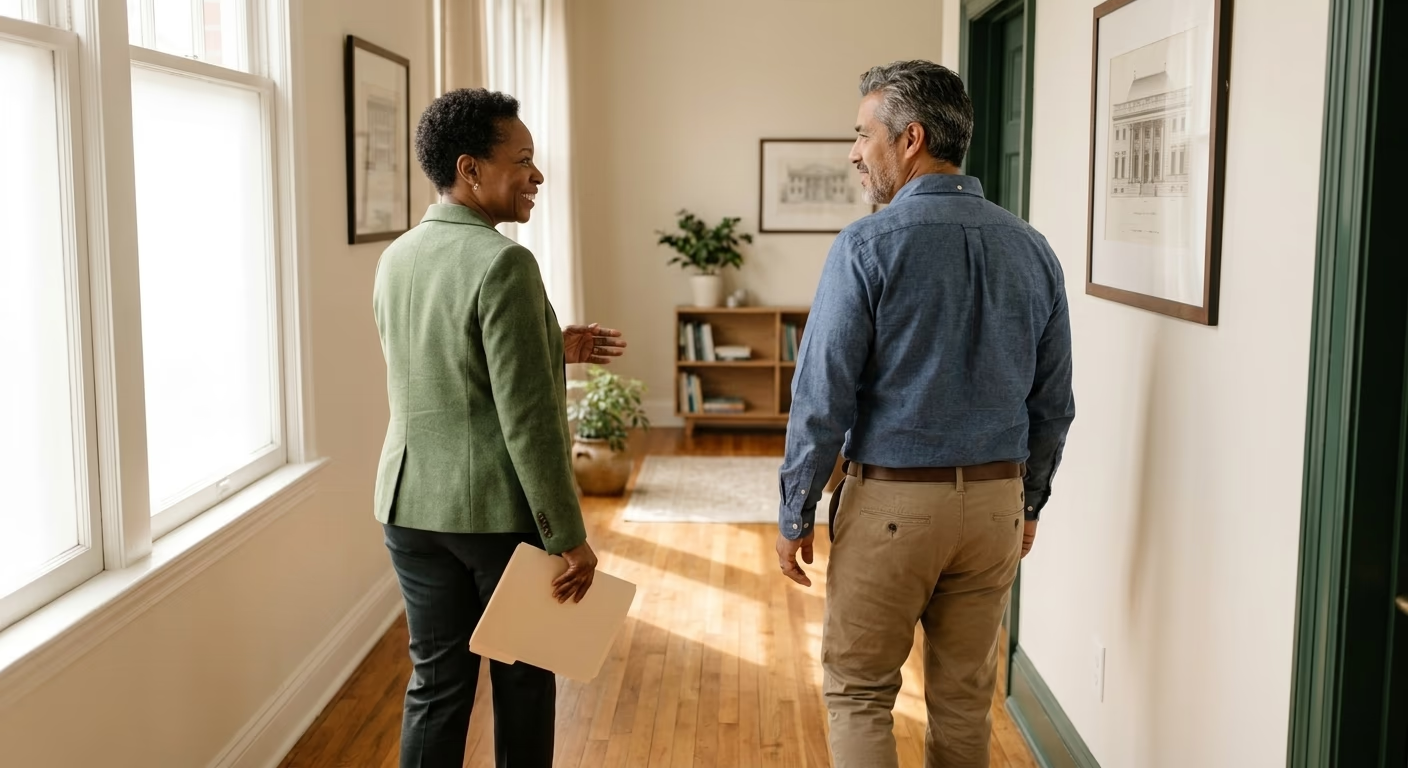
Geriatric mental health Irvington NJ families are looking for is usually two things at once: a prescriber who understands older adults, and the local services nobody told them existed. This page covers geriatric mental health for Irvington NJ and Essex County: what geriatric psychiatry treats, where to find it locally, what Medicare covers, and the free county and state services almost nobody knows about.
(908) 201-3904 · Book a free 15-min call→ · Maplewood, two miles from Irvington, or by telehealth across NJ
Psychiatric evaluation and medication management for older adults
Medicare, Medicaid, NJ FamilyCare and 18 insurance plans accepted
No therapy, no dementia care, no home visits — we refer for all three
What it is
What a geriatric psychiatrist does
Geriatric psychiatry is psychiatry adapted to how the aging brain and body actually respond. A geriatric psychiatrist evaluates and treats mental health conditions in older adults, prescribes with different rules than in younger patients, and works alongside other specialists rather than in isolation. The work focuses on function as much as on mood. It focuses on what has changed rather than on a checklist, and a geriatric psychiatrist is looking at the whole medication list rather than only at the psychiatric part of it.
The differences that matter:
Medications behave differently. Slower metabolism, more interactions, higher sensitivity. Start low, go slow, and watch for falls, confusion and sedation rather than only for mood.
Physical and mental health overlap constantly. Thyroid disease, B12 deficiency, heart failure, pain, hearing loss and a dozen ordinary medications all produce psychiatric symptoms in older adults.
Cognitive change has to be sorted out. Depression in an older person can look exactly like early dementia, and the two frequently travel together. A comprehensive evaluation distinguishes them, and getting it wrong in either direction costs years.
Presentation differs. Older adults more often report physical complaints, sleep problems, irritability or memory trouble than sadness, and describe themselves as anxious or tired rather than depressed. The emotional vocabulary of this generation is often physical. Behavioral changes are frequently the first sign anyone notices.
A comprehensive approach is essential. Coordination with the primary care doctor, the pharmacy and the family is what prevents the crisis rather than managing it afterwards.
What we do here. Psychiatric evaluation, diagnosis, psychiatric medication management, compassionate care and ongoing support for older adults, in person in Maplewood or by telehealth across New Jersey. Teresa Omwenga is a Board-Certified Psychiatric Mental Health Nurse Practitioner treating adolescents, adults and older adults; she is not a psychiatrist, and in NJ psychiatric nurse practitioners prescribe under a joint protocol with a collaborating physician.
What we do not do. Psychotherapy of any kind, formal neuropsychological testing, dementia care management, home visits, or care inside nursing facilities. Each of those has a better local answer, and they are below. Being clear about it is a priority rather than a disclaimer: older adults and their families waste enough time on the wrong door already.
Conditions
What geriatric psychiatry treats
What is the most common mental illness in the elderly?
Anxiety disorders are the most prevalent mental health conditions in older adults by most population estimates, and depression is the most commonly treated. The two overlap heavily, and in this age group anxiety very often presents as physical symptoms — chest tightness, dizziness, stomach trouble — which is one reason it gets worked up as cardiac or gastrointestinal disease first.
What is the most common mood disorder among older adults?
Depression, by a wide margin. Late-life depression differs from depression at 30: more physical complaints, more memory and concentration trouble, more irritability, less of the classic sadness. It responds well to treatment, as well at 80 as at 40, and it is dangerous untreated: suicide rates in older men are among the highest of any group. Emotional flatness rather than tears is the usual presentation, which is why families often describe the person as "not themselves" rather than as depressed.
The rest of the picture
Grief and bereavement. Ordinary grief is not a mental health issue and does not need medication. Mental health issues and normal sorrow look similar for a few months and diverge after that. Grief that has not moved at all after a year, or that has collapsed into a depressive episode, is a different matter. Older adults accumulate losses faster than anyone: a spouse, friends, siblings, and the grief compounds. Ongoing support through that period does more than any prescription.
Life transitions. Retirement, the loss of a driving license, moving out of the family home, becoming a caregiver, or the reverse. Life transitions of this kind cluster in a short window and compound each other, and life transitions at this stage remove structure and identity at once — exactly what mood disorders feed on. The loss of independence is the one people grieve hardest and mention least.
Isolation. Living alone after a spouse dies is a major risk factor for both depression and cognitive decline, and it is a treatable one. Emotional well being in later life tracks social contact more closely than it tracks physical health, which is why transportation and day programs are mental health services in everything but name. Well being of that kind is what they actually buy.
Anxiety, including generalized anxiety and health anxiety, plus panic that starts for the first time late in life and should always prompt a medical workup.
Long-standing conditions carried into later life — bipolar disorder, PTSD, which frequently resurfaces in retirement when work stops occupying the mind, OCD and ADHD. ADHD in particular is under-recognized in this age group entirely, and people diagnosed at 70 usually describe a lifetime that suddenly makes sense.
Sleep. Insomnia is common, treatable, and frequently mismanaged with medications that raise fall risk. It gets addressed directly rather than sedated.
Behavioral and psychological symptoms of dementia — agitation, sleep reversal, suspiciousness. These need specialist input and often a team, and we will say when a case needs more than a private practice can give.
Treatment
Medication management for older adults
The medication review comes first. Before starting any treatment, a full medication review across every prescriber: what each drug is for, whether it is still needed, and what it interacts with. Older adults commonly take several medications for chronic conditions, and deprescribing one is often worth more than adding another.
Antidepressants. Emotional symptoms respond to the same medications used at any age, with different dosing. Sertraline, escitalopram and mirtazapine are commonly used in this age group; timelines are the same as in younger adults but the dose is lower and the titration slower.
What gets avoided. Benzodiazepines and anticholinergic medications carry real risks in older adults — falls, confusion, cognitive impairment. These are the medications most worth reviewing before any new treatment is added. Where they are already in place, the conversation is about a careful taper rather than an abrupt stop.
Monitoring. Comprehensive monitoring: blood pressure sitting and standing, sodium on SSRIs, kidney function, weight and gait. Labs where the medication requires them. Psychiatric medication management in geriatric patients is closer to internal medicine than it is to a prescription pad, and comprehensive care means the prescriber is looking at the whole picture rather than the psychiatric slice of it.
Psychotherapy works here too. CBT, problem-solving therapy and interpersonal therapy all have good evidence in older adults and address mental health challenges without adding another pill; mental health challenges in later life often respond faster than people expect, and psychotherapy is underused as a treatment in this group because of an assumption that people do not change late in life. They do. We refer for psychotherapy rather than provide it, and telehealth has made it far easier to access.
Local resources
Where can I find geriatric psychiatry services in New Jersey?
This is the part worth keeping. Most of these services are free or covered, and most Irvington families have never heard of them.
Essex County Division of Senior Services runs the county's Aging and Disability Resource Connection (ADRC) — a single point of entry for information on senior services, benefits screening, in-home support and care options. This is the first call for anyone trying to work out what an older relative in Essex County is entitled to, and it addresses benefits and services in one conversation.
Irvington's own Division of Health and Senior Services advocates for township residents aged 60 and over, and provides transportation assistance and community engagement activities specifically aimed at reducing isolation. Transportation is the barrier that stops most seniors in Irvington getting to appointments, and it is solvable. Seniors who cannot drive should ask about it by name.
Clara Maass Medical Center in Belleville operates geriatric behavioral health services and outpatient psychiatric care. It is also Essex County's psychiatric emergency screening center — (973) 844-4357, around the clock.
S-COPE, the Statewide Clinical Outreach Program for the Elderly, provides free psychiatric consultation for adults 55 and over living in nursing facilities. It is funded by the New Jersey Department of Health, operated by Trinitas Regional Medical Center, runs four offices across the state and takes crisis calls seven days a week. Toll free: 1-855-718-2699. If your relative is in a nursing home in NJ and their behavior has changed, this service exists for exactly that and costs nothing.
NJ Mental Health Cares, 866-202-HELP (4357) — free telephone counseling and behavioral health information from trained counselors, for the older adult or for the family. It is the fastest way to find mental health services anywhere in NJ.
Adult day programs across Essex County provide structure, supervision and social contact during the day for seniors, and they reduce caregiver burnout as much as they help the person attending. For isolated seniors they are frequently the single highest-value service available. The ADRC can tell you which ones are licensed and what they cost.
Eldercare Locator, 1-800-677-1116, for senior services anywhere in the country, and NAMI New Jersey, 866-626-4664, for free family support groups.
In a crisis: call or text 988 any time, or 911 for immediate danger.
What is a geriatric psych unit?
An inpatient hospital unit designed for older adults with acute psychiatric illness — severe depression, psychosis, mania, or dementia with behavioral symptoms that cannot be managed safely at home.
What makes it different from a general psychiatric unit: medical staffing on site, because these patients usually have several physical conditions at once; a physical environment designed around falls and confusion, with safer flooring, better lighting and clearer signage in the ward environment; a slower pace and shorter, more frequent contacts; and a discharge plan built with the family rather than handed to them. Stays typically run one to three weeks. Admission usually comes through an emergency screening center — for Essex County, the Clara Maass center in Belleville. Patients are usually referred there from an emergency department, a nursing facility or a family who called the screening center directly.
Finding care
NJ mental health services for seniors, and how to choose
New Jersey mental health services for seniors are delivered by four different kinds of provider, and picking the wrong one wastes months.
Private psychiatric practices like this one, including family psychiatry practices that see every age group. Outpatient evaluations and medication management, usually with the shortest wait and the most continuity. Most clients see the same clinician every visit, and clients over 70 particularly value that continuity; older clients do worse when the prescriber changes every few months.
Hospital geriatric behavioral health services. Inpatient units, partial programs and outpatient clinics attached to a medical center, where psychiatric care sits next to medical care. The right answer when the case is complex or when medical and psychiatric problems are tangled together, because psychiatrists there sit alongside other specialists.
Community mental health services. Sliding scale, accept Medicaid, and often the only NJ mental health services available to seniors without good insurance coverage.
In-facility services. For seniors living in nursing homes or assisted living, S-COPE and facility-contracted psychiatrists deliver behavioral health services on site. These psychiatrists are often the only mental health contact residents have.
How to choose. Ask three questions of any practice: do you regularly see patients over 70, do you accept Medicare, and will you talk to their primary care doctor. A practice that hesitates on any of the three is not the right one. Psychiatrists and psychiatric nurse practitioners with real experience in this age group are in short supply in New Jersey, and geriatric psychiatrists especially so, so ask directly rather than assuming.
Evaluations worth distinguishing. A psychiatric evaluation diagnoses and treats. Neuropsychological evaluations — several hours of formal cognitive testing — answer the dementia question properly when a screen is not enough. Driving evaluations and capacity evaluations are separate again and usually arranged through a hospital or an attorney. Asking for the wrong one of these is the most common delay in the whole process.
For families
For families and caregivers
When to be concerned. Withdrawal from things they used to do. Not eating. Sleeping all day or not at all. New confusion. Emotional flatness where there used to be interest, and emotional reactions that seem out of proportion. Giving away possessions. Saying they are a burden. Any talk of not wanting to be here — that is never "just age" and should be asked about directly.
Ask the question. Asking an older relative directly whether they have thought about ending their life does not plant the idea, and it is frequently a relief. Older adults will usually answer honestly if the question is asked plainly, and compassionate support afterwards matters more than a perfect script.
How to raise it. Start from the physical: sleep, appetite, energy, memory. Offer to come to the first appointment. Frame it as a check rather than as a psychiatric referral, which this generation frequently experiences as stigmatizing.
What the family brings to the appointment. The complete list of medications from every prescriber, a timeline of when things changed, and specific examples rather than general worry. Patients rarely remember every medication, and older patients on eight of them almost never do. Families see the pattern that the ten-minute visit cannot, and families who write things down get better care for the person than families who rely on memory.
Caregivers, look after yourselves. Caregiver depression is common and under-treated, and adult children caring for a parent are the group most likely to go without help themselves. Support for caregivers is not a luxury, and children caring for a parent need their own support in place. NAMI's Family-to-Family course is free, respite through adult day programs is real, and a caregiver who collapses helps nobody. This is not selfishness; it is planning.
Practical
Telehealth, Medicare and the first appointment
Telehealth suits older adults better than people expect. It removes driving and parking, which for many is the whole barrier. It lets a son in Atlanta or a daughter in Newark join the appointment remotely — genuinely useful when the family is spread out. Secure telehealth works well for both evaluation and ongoing treatment, and many older patients prefer it once they have done one.
When in person is better. A first evaluation where the physical picture matters, significant hearing or vision impairment, anyone without help to set up the call, and any situation where safety at home is in question.
Medicare. Medicare Part B covers outpatient psychiatric care and most behavioral health services, and an annual depression screening in a primary care setting is covered at no cost. Medicare covers telehealth for mental health, with its own rules about periodic in person visits that are worth confirming. Medicare Advantage plans vary, so check the network before booking. We accept Medicare, Medicaid, NJ FamilyCare and 18 commercial plans, and we verify your insurance on the free call before anything is scheduled.
The first appointment takes about an hour: current symptoms, full medical history, every medication, a cognitive screen where indicated, sleep, alcohol, losses in the last two years, and what daily life actually looks like now. It produces a diagnosis and a plan, and family are welcome in the room or on the call.
Getting here. 1585 Springfield Avenue, Maplewood, NJ 07040 — two miles up Springfield Avenue from Irvington NJ, with free parking directly outside, which matters more at this age than at any other. Irvington has no train station; the Irvington Bus Terminal at 1085 Clinton Avenue runs the 375 toward Maplewood.
Where to start
The single most useful thing this page can tell you: depression, anxiety and grief in later life are treatable, and treating them restores more quality of life per unit of effort than almost anything else in medicine. Quality of life is the only endpoint that matters at this stage. Nobody should spend their last decade struggling with something a medication and a few conversations would fix. We are committed to being straight about which part we can do and which part we cannot.
Start with the free 15-minute call, or with the Essex County ADRC if what you need is the wider picture of senior services rather than a prescriber. Either way the first step is a phone call that addresses the immediate question. If this practice is not the right fit, we will say so and point you somewhere better.
Maplewood Mental Health Clinic · 1585 Springfield Avenue, Maplewood, NJ 07040 · (908) 201-3904 · serving Irvington NJ, Newark and Essex County · In crisis: 988 · Essex County screening, Clara Maass: (973) 844-4357
Take the next step.
Start with a free 15-minute call. We will talk through fit, timing, and insurance — there's no obligation to book an evaluation after the call.