East Orange, NJ · Essex County · Psychiatric care for older adults
Geriatric Mental Health East Orange, NJ
Geriatric Mental Health East Orange, NJ: Late-life depression and anxiety are not part of aging. They are treatable conditions that respond as well in a seventy-eight year old as in a thirty-eight year old, and they are among the most under-treated conditions in American medicine because everyone involved — the patient, the family, and frequently the doctor — writes them off as what getting old feels like.
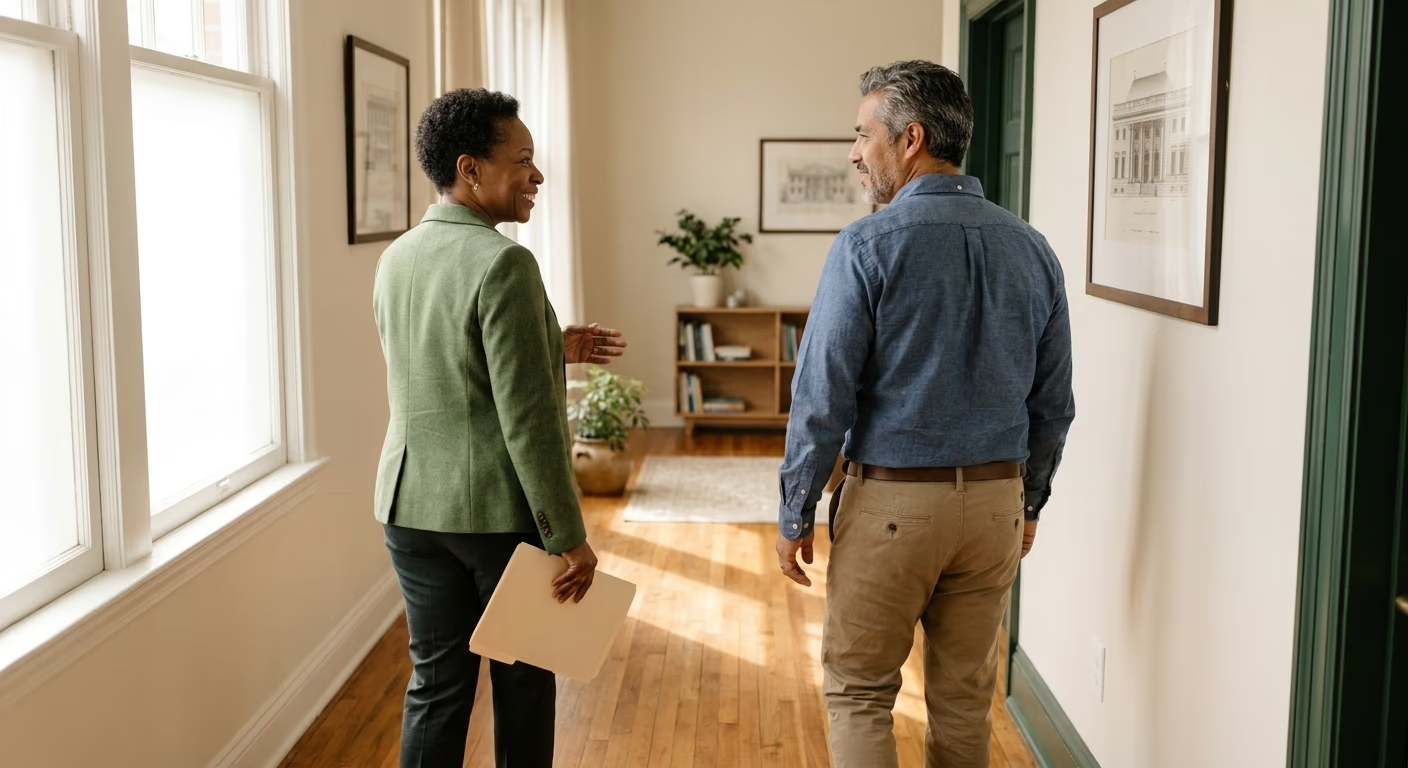
Geriatric mental health East Orange NJ families can start with a free 15-minute call. Three and a half miles from East Orange down Springfield Avenue, or by video anywhere in New Jersey.
Psychiatric evaluation and medication management for older adults
Careful attention to interactions with medications for heart disease, diabetes and other chronic diseases
Medicare, New Jersey Medicaid and 18 insurance plans accepted
In person in Maplewood or by video, with family members welcome
Coordination with geriatrics, primary care and the rest of a senior's medical team
If you are in crisis right now
Call or text 988 any time. For immediate physical danger, call 911. East Orange is in Essex County, and the county's psychiatric emergency screening service is at Clara Maass Medical Center, 1 Clara Maass Drive, Belleville — (973) 844-4357, around the clock. Clara Maass also runs geriatric behavioral health services, so it is the right destination for an older adult in crisis rather than a general emergency room where the mental health picture gets lost behind the medical one.
If the person lives in a nursing facility, New Jersey has a program almost nobody knows about. S-COPE — the Statewide Clinical Outreach Program for the Elderly — is a state-funded interdisciplinary team operated by Trinitas Regional Medical Center that provides crisis response and clinical consultation for residents aged 55 and over in nursing facilities. It runs from four offices across New Jersey, takes crisis calls seven days a week, and is reached toll free at 1-855-718-2699. It costs the family nothing, and it is the fastest route to a behavioral health assessment for a facility resident.
Other numbers worth keeping: NJ Mental Health Cares 866-202-HELP (4357) · NAMI-NJ 866-626-4664, with an Essex County chapter · Eldercare Locator 1-800-677-1116 · the City of East Orange Senior Services Division, for local programs, transport and congregate meals.
The conditions
Four conditions that matter most in older adults.
Ask what the common mental health issues are in this age group and the honest list is short. These are the disorders that account for most of what seniors actually present with, and the mental health issues that most often go untreated.
Depression. The most common and the most missed. Late-life depression frequently presents without sadness: what shows up instead is physical — aches, pain that has no clear source, fatigue, appetite loss, poor sleep — or as a withdrawal from things the person used to do. Because those look like aging or like a medical problem, depression in older adults is routinely attributed to something else. It should not be. It responds to treatment at about the same rate as in younger adults, and untreated it raises mortality from every other cause. Older men in particular have among the highest suicide rates of any group in the United States, which is the single most important reason to take a low mood in an older person seriously. Depression is also among the most treatable disorders in all of medicine, at any age, and treating it improves the outcome of the chronic diseases alongside it.
Anxiety. Common, under-recognized, and frequently tied to something concrete — falls, money, driving, a diagnosis. Anxiety at this stage is often treated with benzodiazepines, which is the wrong answer: in older adults they raise fall risk and cloud cognition. Better options exist. Anxiety disorders and depressive disorders travel together in seniors as much as in anyone else, and stress from caregiving, money or a spouse's illness frequently sits underneath both.
Cognitive decline and dementia. Alzheimer's disease is the most common cause of the neurocognitive disorders, with vascular dementia, Lewy body and frontotemporal dementia behind it. The crucial point for this page is that depression can look exactly like early dementia — slowed thinking, poor concentration, apparent memory failure — and dementia very frequently brings depression with it. Sorting the two apart changes everything about the treatment plan, and it is one of the main reasons a proper psychiatric evaluation matters here. Treatable causes of cognitive impairments are always worth excluding first: thyroid disease, B12 deficiency, infection, sleep apnea, alcohol, and medication side effects. Normal brain changes with age are real — slower recall, slower processing — and they are not dementia; the difference is whether daily function has changed.
Substance use, usually alcohol. An amount someone drank safely at fifty can cause falls, confusion and interactions at seventy-five, because an aging body handles it differently. Prescription medications get misused too, rarely deliberately. Late-onset bipolar disorder is uncommon but does occur, and a first manic episode in an older adult usually means looking for a medical or neurological cause rather than assuming a primary mood disorder.
Two more worth naming. Grief and isolation are not diagnoses, and they drive a great deal of what looks like clinical depression — a spouse dies, friends die, driving stops, and the world contracts. Delirium is an acute confusional state caused by infection, dehydration or a new medication; it comes on over hours or days rather than months and it is a medical emergency, not psychiatry. Sleep disorders, chronic pain and the neurodegenerative diseases round out the list, and each makes every other condition here worse.
Where to go
Where to find geriatric psychiatry in New Jersey.
Geriatric psychiatry is a recognized subspecialty — psychiatrists who completed a fellowship in the mental health of older adults. There are not many of them, and in New Jersey they cluster around the academic and hospital systems. A shortage of geriatric psychiatrists is a national problem rather than a local one, and it means most older adults are treated by general psychiatry, by psychiatric nurses and nurse practitioners trained in this population, or by primary care. Psychiatric nurses and advanced practice nurses carry a large share of geriatrics care in New Jersey, and the expertise that matters is experience with aging patients rather than the title on the door.
That is the practical map for East Orange:
Hospital geriatric behavioral health. RWJBarnabas runs geriatric behavioral health services at Clara Maass in Belleville, which is also the county's screening center. Hackensack Meridian and Carrier Clinic run older adult inpatient programs. A geriatric psych unit is an inpatient ward staffed and physically designed for older adults — slower pace, fall precautions, attention to medical comorbidity, and a shorter stay aimed at stabilizing a crisis rather than at long-term treatment. Admission usually follows an emergency screening, and these units handle geriatric patients that general adult wards are not set up for.
East Orange General Hospital has historically run a behavioral health program with crisis intervention locally, and it appears in senior services listings for the city. Confirm current availability before relying on it — hospital service lines in this county have changed hands more than once.
Community behavioral health. Essex County providers offering evaluations, counseling and medication management on a sliding scale. These evaluations are thorough and the health services around them are broader than a private practice offers. Ask specifically whether they see geriatric patients, because not every program does. A comprehensive community program will also connect seniors to benefits, transport and food support, which private practices cannot.
Geriatrics practices. Geriatrics is its own field of medicine. A geriatrics physician is an internist or family doctor with additional training in the health of aging patients, and a good geriatrics practice will screen for depression and cognitive change as a matter of routine. Several geriatrics services operate in and around East Orange, and comprehensive geriatrics care usually covers memory, mobility, medications and mood together rather than separately. If your parent already has a geriatrics doctor, that is the fastest route to an assessment, and geriatrics practices are generally the best-placed to spot a change early.
Private psychiatric practices like this one, which is where most ongoing outpatient psychiatry for older adults actually happens, usually alongside a geriatrics or primary care practice handling the rest.
Long-term care. If the person is in a nursing facility, S-COPE above is the referral. Many facilities also contract with psychiatry services directly, and residents are entitled to ask what behavioral health support the facility actually provides.
Prescribing
Medication in an aging body.
Psychiatric medication works in older adults. It just has to be prescribed differently, and the difference is not cosmetic.
Start low and go slow. Aging changes how drugs are absorbed, distributed, metabolized and cleared. Kidney and liver function decline gradually, body composition shifts, and the brain becomes more sensitive to sedation. A dose that is routine at forty can be too much at eighty. We typically start at half the usual adult dose and increase in smaller steps over a longer period, which means the treatment takes longer to work and needs saying at the start so nobody gives up in week four.
Polypharmacy is the central problem. Older adults frequently take medications for heart disease, diabetes, blood pressure, pain and several other chronic diseases, prescribed by different specialists who may never have spoken. Every new psychiatric medication enters that picture. Comprehensive medication management here starts with a full reconciliation — everything, including over the counter sleep aids and supplements — before anything is added. Chronic diseases and the medications that treat them interact with psychiatric drugs constantly, and a comprehensive list is the only defense.
What we avoid where possible. Benzodiazepines, because of falls, confusion and dependence. Strongly anticholinergic drugs, including several older antidepressants and common over the counter sleep aids, because they worsen cognition. Antipsychotics in dementia, which carry a black-box warning for increased mortality in this population and belong only in specific situations, at the lowest effective dose, reviewed constantly.
What usually works. Sertraline, escitalopram and mirtazapine are common first choices in late-life depression, chosen for interaction profile and side effects rather than for efficacy differences. Mirtazapine helps where sleep and appetite have both gone. Response takes longer — eight to twelve weeks is a realistic horizon rather than four.
Psychotherapy works too, and is under-used. Cognitive behavioral therapy and problem-solving therapy both have good evidence in older adults, and behavioral activation — deliberately rebuilding activity — is often the single most effective thing available. That is a referral from us. Both focus on what a person can still do rather than on what has been lost, and coping strategies developed in therapy hold up well in this age group — coping with a new limitation is a learnable skill rather than a matter of temperament.
Lifestyle is not a throwaway. Exercise has genuine antidepressant effect in this group. So does daylight, a regular sleep schedule, hearing aids that actually get worn, and cataract surgery — sensory loss drives isolation and cognitive decline more than most families realize. Lifestyle change of that kind helps aging individuals maintain independence for longer, which is usually the outcome they care about most.
Families
What families and caregivers can actually do.
The most common question from families is how to best support an older adult's emotional well being. The practical answers are unglamorous.
Treat a change as a change. The signal is not sadness; it is difference. Stopping something they used to do. Not answering the phone. Losing weight. Sleeping in the chair. New irritability. Repeated calls to the doctor about symptoms nothing explains. Any of those in someone who was not like that a year ago is worth an assessment.
Ask directly. "Have you been feeling down, or like things are not worth much?" is a question most older adults will answer honestly if it is asked plainly rather than tiptoed around. Asking about thoughts of suicide does not plant the idea; it is the only way to find out.
Protect connection. Isolation is both a cause and a symptom, and it is the single biggest driver of poor mental health in seniors. Transport to a senior center, a standing weekly visit, a phone call at the same time each day, and involvement in something with other people all do measurable work, and seniors who keep one regular commitment in the week do better than those who keep none. The City of East Orange Senior Services Division and the county's senior programs exist for exactly this and are widely under-used.
Get the whole list. Take a photograph of every bottle in the house before any psychiatric appointment. This one act prevents more harm than any other piece of family assistance.
Come to the appointment. With the patient's permission, a family member in the room usually improves the assessment substantially. Older adults under-report, partly from a generation's reluctance to complain and partly because they genuinely do not notice a gradual change. Families notice, and their support in the room shortens the whole process.
Look after the caregiver. Caregiver depression is extremely common and rarely asked about. NAMI New Jersey runs free family support groups, and the Eldercare Locator at 1-800-677-1116 connects families to respite and local services. Support for the caregiver is not a luxury; when it collapses, so does the care.
Do not accept "it's just old age." It is the most common sentence standing between an older adult and treatment that would work.
What we do
What we do, what we do not, and what it costs.
Here: psychiatric evaluation for older adults, differential diagnosis including the depression-versus-dementia question, full medication reconciliation, medication management with attention to interactions and to the aging body, coordination with primary care and other specialists, safety planning, and ongoing care from one clinician. In person in Maplewood or by video, with family members welcome in the room.
Not here: therapy of any kind, formal neuropsychological testing, home visits, nursing home consultation, dementia care management, inpatient care, or crisis response. We do not diagnose dementia formally — that is a referral to neurology, a geriatrics specialist or a memory clinic — though we screen, and we treat the depression and anxiety that so often accompany it. A treatment plan here says plainly which parts we handle and which belong elsewhere, and that treatment plan gets written down rather than assumed.
What it costs. The free 15-minute call is a consultation about fit, with no charge and no insurance billing. An initial psychiatric evaluation is $210 for about 90 minutes; follow-ups are $130 for about 30 minutes. We accept Medicare, New Jersey Medicaid and most major plans used in the state, and whether we are in network depends on your specific plan rather than on the insurer's name, so we check before anything is billed. Medicare covers outpatient psychiatric care and most other health services older adults need, and for anyone with Part D, New Jersey's PAAD and Senior Gold programs help seniors with prescription costs for residents who qualify. If your plan is not listed, ask about a superbill or the sliding scale.
Teresa Omwenga is a Board-Certified Psychiatric Mental Health Nurse Practitioner treating adolescents, adults and older adults across New Jersey. She is not a psychiatrist and not a geriatric psychiatrist; in New Jersey, psychiatric nurse practitioners diagnose and prescribe under a joint protocol with a collaborating physician. What this practice offers is continuity and time — the same clinician across years, appointments long enough to take a proper history, and a holistic approach that treats sleep, hearing, mobility, grief and money as part of the clinical picture rather than outside it. The unique needs of an older patient are mostly practical: an appointment time that works, a dose schedule that fits the rest of the pill box, and someone who will talk to the cardiologist. Emotional aspects of aging — grief, purpose, the loss of a role — get taken seriously rather than medicated away, and the emotional side of a chronic illness is part of the picture rather than separate from it.
The focus is quality of life rather than a score, and quality is measured in what a week contains rather than in what a form says. Quality of life at eighty is made of specific things — sleeping through the night, eating with appetite, seeing people, leaving the house — and treatment that improves a questionnaire without improving those has not worked. Quality of life is the measure the family will remember. Well being of that kind is achievable far more often than families expect, and a good outcome here looks like someone getting their own life back rather than becoming a different person. Emotional well being and physical health move together at this age more than at any other, which is why the focus stays on both.
Questions
Questions East Orange families ask
What are four common mental health conditions in the elderly? Depression, anxiety, dementia-related conditions including Alzheimer's disease, and substance use — most often alcohol. Delirium sits alongside them as a medical emergency rather than a psychiatric diagnosis.
Where can I find geriatric psychiatry services in New Jersey? Hospital systems run the specialty geriatrics programs — Clara Maass in Belleville for Essex County, plus older adult units at Hackensack Meridian and Carrier Clinic. For nursing facility residents, S-COPE at 1-855-718-2699. Otherwise, general psychiatry practices experienced with this population, including this one.
What is a geriatric psych unit? An inpatient ward designed and staffed for older adults, with fall precautions, a slower pace and attention to medical comorbidity. It stabilizes a crisis; it is not where long-term treatment happens.
How can I best support an older adult's emotional well being? Treat any change as a change, ask directly, protect connection, and get them assessed rather than reassured.
Is it depression or is it dementia? Frequently both, and telling them apart is a core part of the evaluation. Depression that mimics cognitive decline improves with treatment, which is itself diagnostic.
Is this just part of getting older? No. Aging brings loss and brings real physical change, and clinical depression and anxiety are not a normal consequence of either.
My mother will not go to a psychiatrist. Common. A video appointment from her own kitchen is easier to agree to than a building, and framing it as a medication review rather than a psychiatric assessment gets a lot of people through the door.
Do you treat people with dementia? We treat the depression, anxiety and sleep problems that accompany it, and we coordinate. We do not provide dementia care management or formal testing.
Do you make home visits or see people in nursing homes? No. For facility residents, S-COPE and the facility's contracted psychiatry service are the routes.
Where to start
The question worth asking is not whether an eighty year old is struggling for understandable reasons. Almost everyone that age has understandable reasons. The question is whether they can still enjoy what they are able to do, and whether the answer changed. If it did, that is treatable and it is worth treating.
The free 15-minute call covers fit, cost and insurance, with an honest answer about whether this is the right place — and families are welcome to make that call on a parent's behalf.
Maplewood Mental Health Clinic · 1585 Springfield Avenue, Maplewood, NJ 07040 · (908) 201-3904 · serving East Orange NJ and Essex County by telehealth
If you are in crisis, call or text 988. Essex County screening: Clara Maass, (973) 844-4357. Nursing facility residents: S-COPE 1-855-718-2699. Emergency: 911.
Take the next step.
Start with a free 15-minute call. We will talk through fit, timing, and insurance — there's no obligation to book an evaluation after the call.