Generalized, social, and related anxiety disorders
Anxiety Treatment Maplewood, NJ
Anxiety Treatment Maplewood, NJ: Evidence-based care for generalized anxiety disorder, social anxiety, specific phobias, and agoraphobia. First-line SSRIs paired with CBT, exposure therapy, and brief supportive work in every visit — in person in Maplewood or via NJ-wide telehealth with Teresa Omwenga, PMHNP-BC.
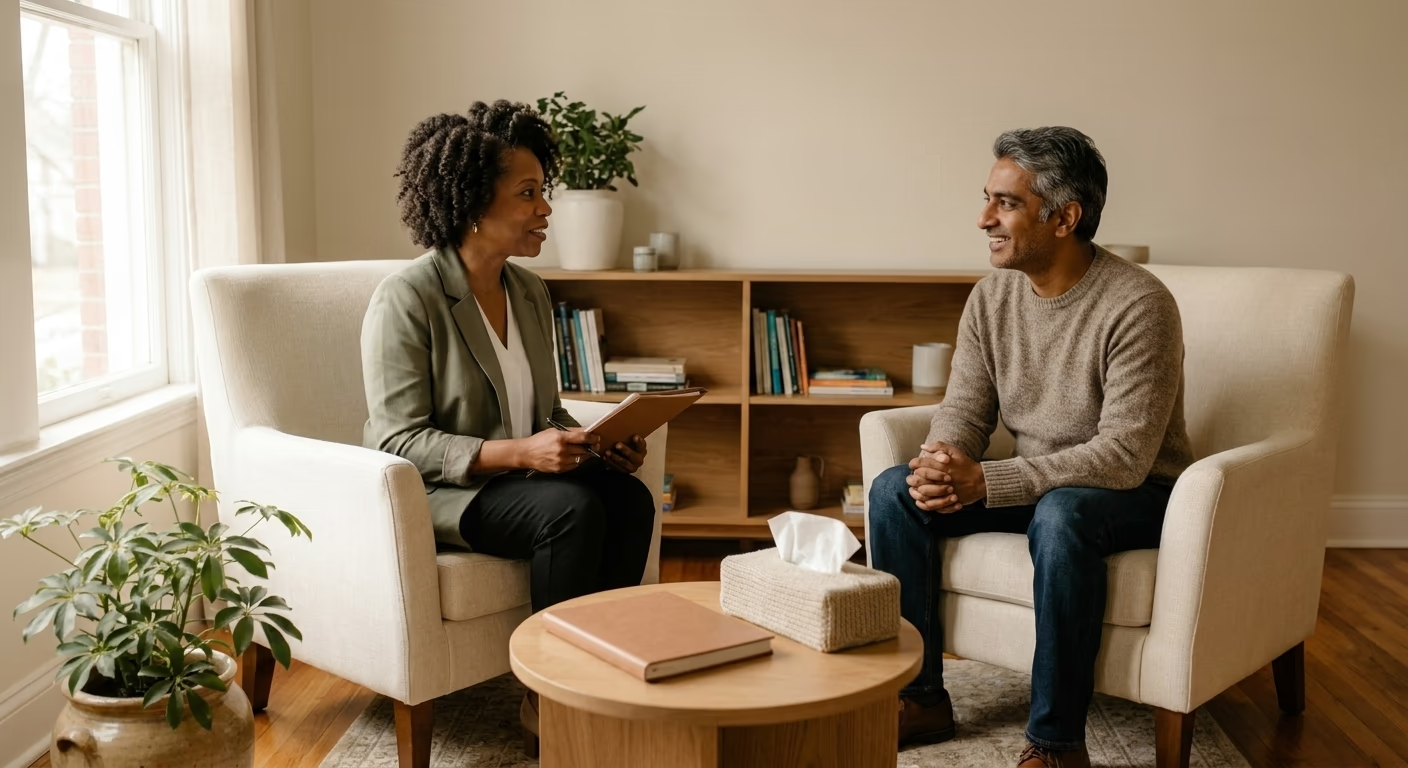
Anxiety care you can actually get into: a free 15-minute call, then an evaluation, usually within one to two weeks.
USPSTF-aligned screening
Benzodiazepine stewardship
CBT + exposure coordination
If you are in crisis right now
Call or text 988 for free, confidential mental health crisis support — 24/7, every day. For a life-threatening emergency, call 911.
This clinic is an outpatient psychiatric practice and is not staffed for crisis response. Messages here are not monitored around the clock.
Other NJ mental health support lines:
NJ Mental Health Cares — 866-202-HELP (4357), 8am–8pm weekdays. New Jersey's behavioral health information and referral line.
NAMI-NJ HelpLine — 866-626-4664, 9am–4pm weekdays.
Peer Recovery Warmline — 877-292-5588.
2NDFLOOR youth helpline — 1-888-222-2228, 24/7.
Once you are safe, we are glad to talk about ongoing outpatient care and the rest of what NJ mental health services can offer.
Not a Personality Flaw — a Treatable Illness That Shapes Daily Life
If you’re looking for anxiety treatment in Maplewood, NJ, Maplewood Mental Health Clinic provides evidence-based care for adults, adolescents, and older adults, with in-person visits in Maplewood and telehealth across New Jersey through Teresa Omwenga, PMHNP-BC. Anxiety is the body's ancient threat-response system firing at things that are not actually threats: a work meeting, a checking account balance, a small social interaction, or nothing identifiable at all. Physically, anxiety looks like racing heart, shallow breathing, muscle tension, stomach upset, restlessness, difficulty sleeping, and a mind that cycles through worst-case scenarios. Cognitively, it looks like rumination — the same worry running on a loop for hours or days, resistant to logic. Behaviorally, it looks like avoidance — of places, people, decisions, and situations that might provoke the anxiety, often leaving you feeling out of control in daily life and shrinking the life around the illness.
About 19% of U.S. adults experience an anxiety disorder in any given year. Most never get treated, often because they have normalized it — "I've always been an anxious person," "It runs in my family," "I just need to push through." The USPSTF now recommends screening all adults aged 19–64 for anxiety, because the gap between what is treatable and what is being treated is too large. The clinical distinction that matters is between ordinary stress (appropriate to the situation, finite, does not derail daily life) and an anxiety disorder (disproportionate to the actual risk, persistent, and causing real functional impact on work, school, and relationships). Because anxiety can steadily erode work, school, relationships, sleep, and emotional balance, getting the right treatment early can help you regain stability and control rather than organizing your life around symptoms.
This page explains how anxiety disorders are diagnosed and treated at our Maplewood, NJ office and through NJ-wide telehealth, including generalized anxiety disorder, social anxiety, panic disorder, specific phobias, agoraphobia, and separation anxiety. It also covers psychiatric evaluation, medication management with first-line SSRI treatment and careful benzodiazepine stewardship, CBT, exposure therapy, brief supportive work, insurance and cost questions, and coordination with outside therapists for people who want clear next steps, continuity with one clinician, and flexible care options. The short version: evidence based treatment starts with an SSRI combined with CBT or exposure therapy; benzodiazepines have a narrow role and a clear exit plan; most patients see meaningful improvement in 8–12 weeks.
Anxiety Therapy and Treatment for Maplewood Residents
Maplewood residents searching for anxiety therapy usually find two kinds of provider: therapists who offer talk therapy but cannot prescribe, and prescribers who write scripts but never ask how the week went. This clinic sits deliberately in between — psychiatric evaluation and medication management, plus brief supportive therapy inside the same visit, coordinated with an outside anxiety therapist when full-course therapy is the right call.
Maplewood clients come to us from the surrounding towns as well, and telehealth covers the rest of NJ. Whether you are looking for anxiety treatment near Maplewood NJ or somewhere else in the state, the entry point is the same free 15-minute call, where people often bring specific concerns to discuss before booking. Anxiety therapy near Maplewood NJ is easier to find than a prescriber who will coordinate with your therapist — we do both, and if you already have a therapist anywhere in NJ we will work with them rather than around them.
In person at 1585 Springfield Avenue, Maplewood, NJ 07040 — free on-site parking.
Telehealth anywhere in NJ, when clinically appropriate.
Phone (908) 201-3904, Mon–Fri 9am–5pm.
What fits under this umbrella
Generalized anxiety disorder (GAD)
Excessive worry about multiple domains (work, health, family, finances) on most days for six months or more, with physical symptoms like muscle tension, difficulty sleeping, irritability, and fatigue. Generalized anxiety is the most common anxiety disorder and often co-occurs with depression. First-line treatment is an SSRI (escitalopram or sertraline) plus CBT; response rates reach 60–70% within three months of combined treatment.
Social anxiety disorder
Intense fear of scrutiny, judgment, or embarrassment in social or performance situations, to a degree that produces avoidance or significant distress. Social anxiety erodes self esteem and relationships over time, and it responds well to paroxetine, sertraline, and venlafaxine alongside CBT with an exposure component. Beta-blockers (propranolol) can be added PRN for performance-specific anxiety — public speaking, auditions — without the dependence profile of benzodiazepines.
Panic disorder
Recurrent unexpected panic attacks plus persistent concern about having more attacks, often with avoidance of places or situations where previous panic attacks occurred. Panic disorder is covered in depth on our panic attack treatment page — treatment overlaps substantially with other anxiety disorders but includes interoceptive exposure work that is specific to panic.
Specific phobias
Intense, disproportionate fear of a specific object or situation (flying, heights, needles, dogs, enclosed spaces). Exposure therapy is the gold-standard treatment, and in most cases specific phobias respond to exposure therapy faster and more completely than any other anxiety disorder. Medication plays a smaller role; we sometimes prescribe a benzodiazepine for a single upcoming flight or MRI, but long-term pharmacotherapy is rarely needed.
Agoraphobia
Fear or avoidance of situations where escape might be difficult or help unavailable — crowds, public transit, bridges, being outside the home alone. Often, but not always, it develops after panic disorder. Treatment combines SSRI pharmacotherapy with graded in-vivo exposure. Telehealth is often essential in the early phase, because leaving home to reach the clinic is itself a specific trigger.
Separation anxiety disorder
Not limited to children — adult separation anxiety disorder is a recognized DSM-5-TR diagnosis involving disproportionate anxiety about separation from attachment figures. Treatment mirrors GAD (SSRI plus CBT) with explicit attention to attachment and relational patterns in therapy.
Anxiety in adolescents
Anxiety frequently starts in the teen years, where it shows up as school refusal, somatic complaints, irritability, or a sudden drop in grades rather than as stated worry. In children and younger adolescents the symptoms often surface at school before anyone at home sees them. We treat adolescents alongside adults and older adults across NJ, and family involvement is standard for younger patients.
How we understand anxiety
Every new anxiety patient at our clinic starts with a 60–90-minute comprehensive evaluation. The clinical interview maps your symptoms against DSM-5-TR criteria for each anxiety disorder on the differential. The GAD-7 — a validated seven-item self-report screener — produces a severity score (0–21, with 10+ suggesting a probable anxiety disorder and 15+ suggesting severe). For social anxiety specifically, we use the Liebowitz Social Anxiety Scale; for panic, a structured panic-frequency record; for trauma-related anxiety, the PCL-5. Like the PHQ-9 in depression, these screeners are not diagnostic on their own. They anchor the conversation in shared data and give us a baseline to measure treatment response on a regular basis.
Several medical conditions mimic anxiety disorders closely enough that we screen for them at the initial visit. Hyperthyroidism produces a nearly identical syndrome — racing heart, sweating, tremor, insomnia, restlessness — and a TSH panel catches it. Cardiac arrhythmias, especially atrial fibrillation and supraventricular tachycardia, present with panic-like chest pressure and palpitations. Pheochromocytoma is rare but causes catecholamine surges that look like panic disorder. Caffeine intake, often underestimated, can produce full-blown anxiety physiology at doses above 400 mg/day. Some medications — decongestants, stimulants, bronchodilators, corticosteroids — cause anxiety as a side effect. We work through the differential before committing to a mental health diagnosis.
SSRIs, SNRIs, and why they come before benzodiazepines
First-line pharmacotherapy for most anxiety disorders is an SSRI or SNRI. The specific agents with the strongest evidence are escitalopram (Lexapro), sertraline (Zoloft), paroxetine (Paxil), venlafaxine XR (Effexor), and duloxetine (Cymbalta). Fluvoxamine (Luvox) is particularly well-evidenced for social anxiety and OCD-spectrum conditions. Typical starting doses are half the depression dose to minimize the initial jitteriness that SSRIs can cause early in treatment; we titrate upward over 2–4 weeks.
Why not just prescribe a benzodiazepine? Two reasons. First, benzodiazepines treat the symptom but do not address the underlying condition — within days of stopping, the anxiety returns, often rebound-worse. SSRIs, by contrast, produce durable benefit that persists after discontinuation in many patients, especially when combined with CBT. Second, benzodiazepines (alprazolam, lorazepam, clonazepam, diazepam) are Schedule IV controlled substances with well-documented tolerance, physical dependence, and withdrawal risk — and for some patients, a genuine addiction risk. Long-term daily use is associated with cognitive side effects, increased fall risk in older adults, and complicated discontinuation. Benzodiazepines have a real place — short-term during SSRI onset, PRN for circumscribed triggers, or as a bridge during a specific acute episode — but they are not a long-term solution for chronic anxiety.
Non-benzodiazepine alternatives include buspirone (a non-controlled anxiolytic for GAD with no dependence profile), pregabalin (first-line in European guidelines — less commonly used in the U.S. but effective), and propranolol for performance anxiety. Hydroxyzine is a non-controlled antihistamine that can be used PRN for acute anxiety in patients for whom benzodiazepines are inappropriate.
Schedule IV stewardship, transparently
We do prescribe benzodiazepines when they are clinically indicated. The typical use cases are a 2–4-week bridge during the early phase of SSRI treatment; PRN use for specific triggers that are predictable (flying, MRI, medical procedures, a one-off public-speaking event); or short-term treatment of acute situational anxiety following a specific life event. Less commonly, we continue long-standing benzodiazepine therapy for patients who were stabilized on it by a prior provider, after a careful review of risks and benefits and with an explicit plan about whether and when we would consider a taper.
What we do not do is renew benzodiazepine prescriptions indefinitely without conversation. Every benzodiazepine prescription carries a clinical rationale in the chart. We check the New Jersey Prescription Drug Monitoring Program (NJ PDMP) before every controlled-substance prescription — a regulatory requirement and a safety check — and flag patterns that suggest concerning use. If a structured taper is indicated, we build the taper schedule, support you through the 4–8-week process, and typically bring CBT and an SSRI online before or during the taper.
Evidence Based Therapy: CBT, Exposure, ACT, and Where to Find Them
Cognitive Behavioral Therapy is the most-evidenced psychotherapy for anxiety disorders. A standard course is 12–20 weekly therapy sessions, targeting both the thought patterns that maintain anxiety (catastrophizing, probability overestimation, intolerance of uncertainty) and the avoidance behaviors that prevent the anxiety from disconfirming itself. For generalized anxiety, CBT with a worry-postponement component is the standard protocol. For social anxiety, CBT with cognitive restructuring and graded exposure to feared social situations is the protocol.
Exposure therapy — sometimes delivered as a freestanding protocol, sometimes embedded in CBT — is the core active ingredient for specific phobias, social anxiety, panic disorder, and agoraphobia. It involves systematic, graded contact with the feared object or situation until the anxiety response attenuates, which it reliably does with adequate dose and duration. Exposure can be in vivo, imaginal, or virtual-reality-assisted. Acceptance and Commitment Therapy (ACT) is an alternative to classical CBT that emphasizes psychological flexibility and values-based action rather than symptom reduction; it has strong evidence and is often preferred by clients who dislike the structured worksheets of classical CBT.
Teresa provides brief supportive work, motivational interviewing, and basic cognitive strategies during medication visits. For full-course weekly CBT, exposure, or ACT with a dedicated therapist, we refer to New Jersey anxiety therapists — licensed clinical social workers and psychologists with current openings and confirmed insurance panels. A good therapist match matters as much as the modality, and we would rather send you to the right anxiety therapist in NJ than keep the work in-house badly. If a therapist you already trust has no opening, say so — waiting for the right person is sometimes better than starting with the wrong one.
What We Refer Out: Group Therapy and Intensive Outpatient Program
Being clear about this saves everyone a wasted appointment:
Weekly individual psychotherapy. We coordinate with your therapist; we do not deliver the weekly course ourselves.
Group therapy. Group therapy for anxiety has solid evidence, particularly CBT-based groups, but it is not offered at this clinic. NAMI-NJ and NJ Mental Health Cares can point you to local options.
Intensive outpatient program. If your anxiety needs an intensive outpatient program or partial hospitalization, we will say so and help arrange the referral rather than stretch outpatient care past what it can hold.
Inpatient care. Same principle, escalated.
Sleep, caffeine, exercise, and breathing
Several lifestyle interventions have real effect sizes for anxiety and compound the benefit of medication and therapy. Aerobic exercise three to five times per week produces consistent anxiety reduction with effect sizes in the range of mild SSRI response. Consistent sleep timing — same bedtime and wake time, including weekends — stabilizes the circadian architecture that anxiety disrupts. Caffeine is the single most underestimated anxiety driver; many clients normalize three to six cups of coffee per day and describe anxiety that fades when we halve the intake. Alcohol reduces anxiety acutely but produces rebound anxiety the next day; where alcohol is being used as self-medication, treating the underlying anxiety usually reduces the drinking.
Breathing techniques have a legitimate physiologic basis — slow nasal breathing activates the parasympathetic response and measurably lowers heart rate and cortisol. Two of the most teachable protocols are box breathing (inhale 4, hold 4, exhale 4, hold 4) and 4-7-8 breathing (inhale 4, hold 7, exhale 8). Both produce a noticeable shift within 3–5 minutes of practice. They are not a substitute for treatment, but they are useful in-the-moment tools and a reasonable first step while a first SSRI reaches full effect.
Mindfulness meditation has a growing evidence base for anxiety, particularly Mindfulness-Based Stress Reduction (MBSR), an eight-week structured program. We recommend apps for clients who want to start, and formal MBSR programs in the Newark and Morristown areas for those who want a structured group curriculum.
What to expect in weeks 1, 4, and 12
Weeks 1–2. Starting an SSRI often produces a paradoxical early increase in anxiety before the therapeutic effect arrives. We start at half-dose specifically to minimize this. Some patients experience nausea, jitteriness, or sleep disruption in the first 7–10 days. These early effects nearly always settle by week 2 and do not predict how you will do at steady state. We check in at 1–2 weeks to troubleshoot.
Weeks 3–6. The SSRI is approaching therapeutic blood levels. You may notice that worry episodes are shorter, that the physical symptoms are less intense, or that you can engage with a feared situation without the full escalation. Many patients describe it as "the volume got turned down" rather than "the anxiety is gone." Dose adjustments happen here — if you are tolerating the medication but not yet responding, we typically raise the dose to the middle of the therapeutic range.
Weeks 8–12. Full therapeutic effect. This is where we make decisions: continue if it is working, augment with a second agent if the response is partial, or switch if there has been essentially no benefit at an adequate dose. If you are in CBT or exposure work, week 12 is usually where the therapy is paying off — the combined effect of SSRI plus therapy is where the literature shows the strongest outcomes. Maintenance visits move to every 4–8 weeks after response, and we plan for a supervised taper around month 9–12 for first-episode patients.
Not every case is fully resolved in twelve weeks. Some patients need a second medication trial, and some need longer therapy. We will tell you where you actually stand rather than declare victory on schedule.
Anxiety plus depression, ADHD, or panic disorder
Anxiety is almost never a solo diagnosis. Roughly half of patients with an anxiety disorder also meet criteria for depression, and a meaningful fraction have ADHD, panic disorder, or a trauma history on top. Managing the full picture in one practice — rather than fragmenting it across clinicians who do not talk to each other — is the biggest structural advantage of the PMHNP model for comorbid patients. One plan, one record, one relationship.
When anxiety co-occurs with depression, an SSRI usually addresses both — sertraline, escitalopram, and venlafaxine have solid evidence across the anxiety-depression spectrum. When anxiety co-occurs with ADHD, sequencing matters: stimulants can worsen anxiety in some patients, so we typically treat the anxiety first, stabilize it, then layer a stimulant or non-stimulant; sometimes a non-stimulant (atomoxetine, guanfacine) is the better ADHD choice in anxious patients. When anxiety co-occurs with panic disorder, the panic piece often drives the anxiety piece, and successful panic treatment often resolves the residual generalized anxiety. Where trauma is part of the picture, we screen for PTSD explicitly with the PCL-5 and refer to a trauma-focused therapist in parallel with pharmacotherapy. Grief, family issues, and chronic relationship stress are common triggers we take seriously even when they do not meet criteria for a separate diagnosis.
Mental Health Care in One Visit: Medication and Supportive Therapy
Unlike practices that split prescribing and therapy across two clinicians, Teresa can include medication management and brief supportive therapy in the same visit. It matters for anxiety care because medication decisions are stronger when tied to how the last week actually went. Full-course weekly CBT and exposure work is still better delivered by a dedicated therapist; we make those referrals and coordinate, but the medication visits are meaningful therapeutic encounters in themselves, not prescription refills.
Teresa is a Board-Certified Psychiatric Mental Health Nurse Practitioner with extensive experience treating anxiety in adolescents, adults, and older adults across NJ. That extensive experience across mental health services matters most in the unglamorous decisions — which agent, what dose, when to wait. The aim is a supportive environment and compassionate support without the fifteen-minute conveyor belt — a safe space to say the thing you have not said to anyone yet, and an emotional tone that does not make you brace before every visit.
Anxiety treatment is not only symptom reduction. Most clients want their emotional life back — the capacity to be present with family, to hold relationships without constant monitoring, to sleep through the night. Healing from an anxiety disorder rarely looks like a dramatic breakthrough; it looks like a slow return of emotional bandwidth, where the worry still shows up but no longer runs the day. We track well being alongside GAD-7 scores, because a number can improve while daily life does not. Grief, burnout, and ordinary hard seasons get named as themselves rather than medicated by default.
Telehealth works well for anxiety treatment across NJ. For agoraphobic patients, starting without leaving home is often what makes care possible at all. For social anxiety, a video appointment bypasses the waiting room. For demanding schedules, a lunchtime 30-minute telehealth visit is easier to sustain. Before a video visit we confirm privacy, location, device, and connection.
Anxiety Treatment Maplewood NJ: Cost, Insurance, and Access
Mental health care should not require a phone call to find out what it costs. Knowing the numbers up front removes one source of stress from the decision, and it is part of why clients in NJ pick a small clinic over a larger one.
Free 15-minute call — no charge, no obligation, no insurance billing.
Initial psychiatric evaluation — $210, about 90 minutes.
Follow-up visit — $130, about 30 minutes.
Eighteen insurance plans are listed on our main page, and we verify your specific plan and benefits during the free call before any paid visit. We provide assistance with verification and superbills so the billing side does not become another thing you have to manage. Insurance directories lag behind real credentialing status, so we check rather than assume. If your plan is not listed, ask about a superbill for out-of-network reimbursement, or about the sliding scale — self-pay rates are reduced 20% to 50% depending on your situation, with no formal paperwork required.
Serving Maplewood and Towns Near Maplewood NJ
In person visits at our Maplewood, NJ office, with telehealth available for NJ residents when clinically appropriate. Every town below is within reach of the Maplewood office in person, and all of NJ is reachable by video.
Things patients ask about anxiety treatment
What's the difference between anxiety and an anxiety disorder?
Ordinary anxiety is proportionate, finite, and does not wreck your daily life — nerves before a presentation that fade once it is over. An anxiety disorder is disproportionate to the actual risk, persists for months, and measurably damages work, school, relationships, or sleep. The GAD-7 helps put a number on it, but the functional impact is the real dividing line.
What kind of therapy is best for anxiety?
Cognitive Behavioral Therapy has the strongest evidence base for anxiety disorders overall, and exposure therapy is the core active ingredient for phobias, social anxiety, panic, and agoraphobia. ACT is a well-evidenced alternative for clients who dislike structured CBT worksheets. The best anxiety therapy is the evidence-based one you will actually attend on a regular basis, with a therapist you do not dread seeing.
Do I have to take medication, or will therapy work?
Therapy alone works for many people, particularly in mild to moderate anxiety and especially for specific phobias. Medication alone also works. The combination generally outperforms either on its own for moderate to severe anxiety. You are not obligated to take anything — we will lay out the options and you decide.
Are SSRIs addictive?
No. SSRIs do not produce craving, tolerance, or dose escalation, which is what addiction means clinically. They can cause discontinuation symptoms if stopped abruptly, which is why we taper rather than stop cold. That is physical adaptation, not addiction — a different thing entirely from the benzodiazepine picture.
Why don't you just prescribe Xanax for my anxiety?
Because it would help this week and hurt next year. Alprazolam works fast, but tolerance builds, the anxiety rebounds harder between doses, and discontinuation gets difficult. We do prescribe benzodiazepines for specific triggers and short bridges, with a plan attached. For ongoing anxiety treatment, an SSRI plus therapy gives durable benefit instead of a loop.
How long until I feel better on medication?
Some easing by weeks 3–6, full therapeutic effect around weeks 8–12. The first week or two can feel slightly worse before better, which is why we start at half dose. If nothing has shifted at an adequate dose by week 8, that is information and we change course.
What if I have anxiety AND depression?
Extremely common — roughly half of anxiety patients also meet criteria for depression. The good news is that the same first-line medications treat both. We assess both at intake and track both over time rather than treating one and hoping the other follows.
Can you help with social anxiety specifically?
Yes. Social anxiety responds well to sertraline, paroxetine, or venlafaxine paired with CBT that includes graded exposure. Propranolol PRN can cover discrete performance situations. We use the Liebowitz Social Anxiety Scale to measure where you start and whether it is moving.
Is telehealth effective for anxiety?
Yes, with good evidence behind it. For agoraphobia and social anxiety it can be the only realistic way to start. Some situations still call for in person visits — a first evaluation, or a medication that needs closer monitoring — and we will tell you when that applies.
Will my insurance cover anxiety treatment?
Often, yes. We verify your specific plan during the free call before you pay for anything. If you are out of network, we provide superbills, and a sliding scale is available for self-pay clients.
What's the GAD-7 and why does it matter?
A validated seven-item questionnaire scoring anxiety severity from 0 to 21. Scores of 10+ suggest a probable anxiety disorder and 15+ suggests severe. It is not a diagnosis on its own, but repeating it over time turns "I think I'm a bit better" into a number we can both see.
What resources can I find for anxiety?
Beyond treatment: NAMI New Jersey runs free peer support groups across NJ, many of them virtual. NJ Mental Health Cares (866-202-HELP) is the state's behavioral health referral line. The Anxiety and Depression Association of America publishes free self-help material. 988 is available 24/7 for crisis support. These support services supplement mental health treatment rather than replace it.
Is there any free online group therapy for anxiety?
Free peer support groups are widely available online through NAMI and similar organizations, and they help a great deal with isolation. They are peer support rather than clinician-led group therapy, which is a different service and usually billed through insurance. NJ Mental Health Cares can point you to both.
How to get psychiatric help for a family member?
Start by asking what they want rather than booking for them. Adults have to consent to their own care, so you cannot schedule an evaluation on their behalf without them. What you can do: offer to sit with them during the free 15-minute call, help with the insurance legwork, and drive them to the first appointment. For an adolescent, a parent can book directly. If someone is in immediate danger, call 988 or 911 — that is the one situation where acting without their agreement is right.
Ready to turn the volume down?
Anxiety is one of the most treatable conditions in psychiatry, and outpatient mental health services in Maplewood, NJ are a short call away. Wherever you are in your mental health journey — first appointment ever, or restarting after a long gap — this is a reasonable place to begin. The free 15-minute call is how most of our clients start — no intake paperwork before the call, no obligation, just a conversation about what is going on in your life and whether we are the right fit. Healing starts with someone taking the symptoms seriously in a safe space, and well being follows the work rather than preceding it.
Maplewood Mental Health Clinic · 1585 Springfield Avenue, Maplewood, NJ 07040 · (908) 201-3904
Take the next step.
Start with a free 15-minute call. We will talk through fit, timing, and insurance — there's no obligation to book an evaluation after the call.