Chatham, NJ · Care from a Maplewood-based clinic
OCD Treatment in Chatham, NJ
OCD Treatment for Chatham residents who want careful psychiatric care with one consistent clinician. Maplewood Mental Health Clinic focuses on clear evaluation, medication decisions in context, and follow-up that does not feel rushed.
- Same clinician every visit
- Free 15-min fit call
- Telehealth when appropriate
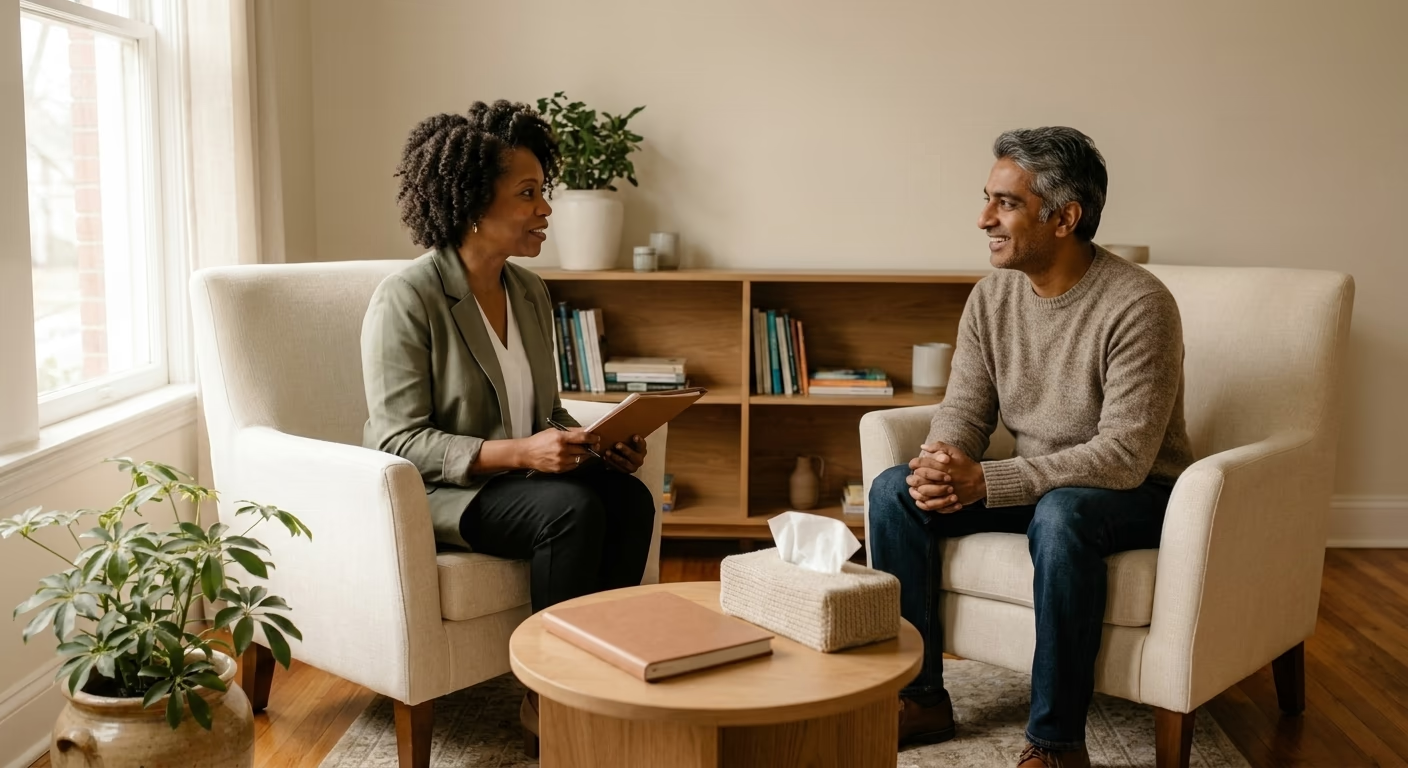
Care for OCD in Chatham
People in Chatham who may benefit from this care.
Chatham patients usually begin by telehealth, with in-person Maplewood visits planned only when the clinical situation calls for them.
For Chatham residents, the drive can make psychiatric care feel harder than it needs to be, especially when follow-ups are frequent early in treatment.
Chatham patients may be willing to travel for the right clinician, but the travel should have a purpose. Early treatment sometimes needs closer contact while symptoms, medication response, and side effects become clearer. Telehealth can keep that process from turning into repeated drives, and an office visit in Maplewood can be reserved for the moments when being seen in person adds something clinically useful.
For Chatham patients, distance can make early psychiatric care feel heavier than it should, especially when the first few months require closer follow-up. For OCD, The first question is how intrusive thoughts and rituals are consuming time, certainty, reassurance, avoidance, family patterns, work, school, or faith concerns. This is why the first conversation stays practical: what is happening, what has already been tried, and what kind of follow-up you can realistically keep.
Chatham context changes how OCD care has to work. For Chatham residents, the drive can make psychiatric care feel harder than it needs to be, especially when follow-ups are frequent early in treatment. OCD can involve intrusive thoughts, doubt, checking, washing, reassurance seeking, mental rituals, symmetry needs, scrupulosity, or avoidance that takes more time than people realize.
That is why the plan does not start with a preset answer. For Chatham residents, Assessment looks at obsessions, compulsions, time spent, functional impact, shame, family accommodation, prior treatment, and co-occurring anxiety or depression. The practice uses telehealth to reduce travel burden while keeping care local to New Jersey and anchored by one clinician.
The practice uses telehealth to reduce travel burden while keeping care local to New Jersey and anchored by one clinician. Patients choose Maplewood Mental Health Clinic when they want a consistent New Jersey clinician, clear follow-up, and care that stays connected from visit to visit.
Understanding OCD
What this care can help with.
OCD can involve intrusive thoughts, doubt, checking, washing, reassurance seeking, mental rituals, symmetry needs, scrupulosity, or avoidance that takes more time than people realize.
Assessment looks at obsessions, compulsions, time spent, functional impact, shame, family accommodation, prior treatment, and co-occurring anxiety or depression.
The visit is not a place where you have to prove your thoughts are scary enough. OCD is treatable, and the plan should respect how distressing the symptoms feel. The main OCD service page explains diagnosis, treatment options, and what to expect beyond the local logistics.
For a fuller explanation of this service, see the main OCD page.
How the work happens
How OCD care works for Chatham residents.
The first step is a free 15-minute call. It is not a diagnostic appointment; it is a fit conversation about what is bringing you in, whether this clinic is the right level of care, and whether the first evaluation should be in person or by telehealth.
If care is a fit, the first clinical visit is a structured psychiatric evaluation. Teresa reviews symptoms, history, medication trials, medical context, safety, and goals before recommending a plan.
Treatment may include SSRI strategies, medication augmentation when needed, psychoeducation, and referral for exposure and response prevention with an OCD-trained therapist.
Telehealth helps keep momentum between visits, and any Maplewood office appointment is planned with a clear reason before you make the trip. In treatment, A useful plan should name OCD without shaming the content of the thoughts, and it should connect medication decisions with exposure-based therapy when needed. Maplewood Mental Health Clinic uses that context to choose the visit format, medication pace, therapy coordination, and follow-up interval rather than separating symptoms from the week you have to live through.
Follow-ups track symptom burden, medication response, side effects, therapy coordination, and whether compulsions are losing their grip on daily life.
Chatham access matters in the treatment plan. If an office visit becomes necessary, we explain why, plan it ahead of time, and keep the rest of the care as practical as possible. For OCD, we keep returning to a practical question: what kind of support can you use consistently, and what needs to change if the plan is not helping enough? Follow-ups track symptom burden, medication response, side effects, therapy coordination, and whether compulsions are losing their grip on daily life.
If an office visit becomes necessary, we explain why, plan it ahead of time, and keep the rest of the care as practical as possible.
Crisis support for Chatham
If you are in psychiatric crisis, this is the right pathway.
OCD Treatment for Chatham residents is outpatient care. If the situation becomes immediately unsafe, if you cannot stay safe, or if you are worried you may harm yourself or someone else, call 911 or go to the nearest emergency room instead of waiting for an appointment.
If distress related to OCD is urgent but not immediately life-threatening, call or text 988 for crisis support. After the immediate safety concern is stabilized, Maplewood Mental Health Clinic can help with the outpatient next step: diagnostic clarification, medication planning, therapy coordination, and follow-up.
Insurance for Chatham residents
What is typically covered — and what is not.
Before a Chatham patient schedules a paid OCD evaluation, the practice checks insurance eligibility, telehealth benefits, copay, deductible, and any plan rules that could affect the first visit.
For OCD, self-pay rates are $210 for an initial evaluation and $130 for follow-up visits. Sliding-scale reductions may be available for self-pay patients who need them, and superbills can be provided for out-of-network reimbursement when appropriate.
Getting started
Starting care from Chatham.
Start with the free 15-minute call. If you are calling from Chatham, you can describe the concern in ordinary language; you do not need to know whether the right label is OCD or something adjacent.
If you already have a therapist, primary-care clinician, school support, or pharmacy preference, that context can shape the outpatient plan with your consent. For Chatham residents starting care for OCD, Progress may look like fewer rituals, less time spent proving certainty, better tolerance of doubt, and more daily choices not governed by compulsions. The goal is a care plan practical enough to follow after the visit ends.
If OCD at this clinic is a good fit, we schedule the evaluation and send intake forms after the call. If another kind of care would match better, Teresa will say that directly and help point you toward the right next step.
Patients often choose Maplewood Mental Health Clinic because they want continuity. The clinician who evaluates your OCD concern is the same clinician who follows up, adjusts the plan, and remembers what has already been tried.
Related care for Chatham residents
Chatham questions about OCD
Questions people ask before starting.
Can Chatham patients receive OCD by telehealth?
Often, yes. Many Chatham patients use telehealth for OCD visits while physically located in New Jersey. If an in-person visit is clinically needed, we plan the Maplewood office visit ahead of time.
Why choose Maplewood Mental Health Clinic for this care?
Chatham patients see the same clinician every visit. The practice is local to New Jersey, session-based, and focused on careful evaluation, medication decisions in context, and practical OCD follow-up.
Will I have to start medication?
No. Medication is discussed when it may help with the OCD concern, but the evaluation can also lead to therapy referral, lab or primary-care coordination, watchful follow-up, or a recommendation for a different level of care.
What happens on the free call?
The free call is a fit conversation for Chatham residents considering OCD. We talk about what is bringing you in, appointment timing, insurance or self-pay questions, and whether the next step should be an evaluation with this clinic.
Start with a clear next step.
Book a free 15-minute call with Maplewood Mental Health Clinic to confirm fit, timing, insurance, and whether OCD is the right starting point for you.